
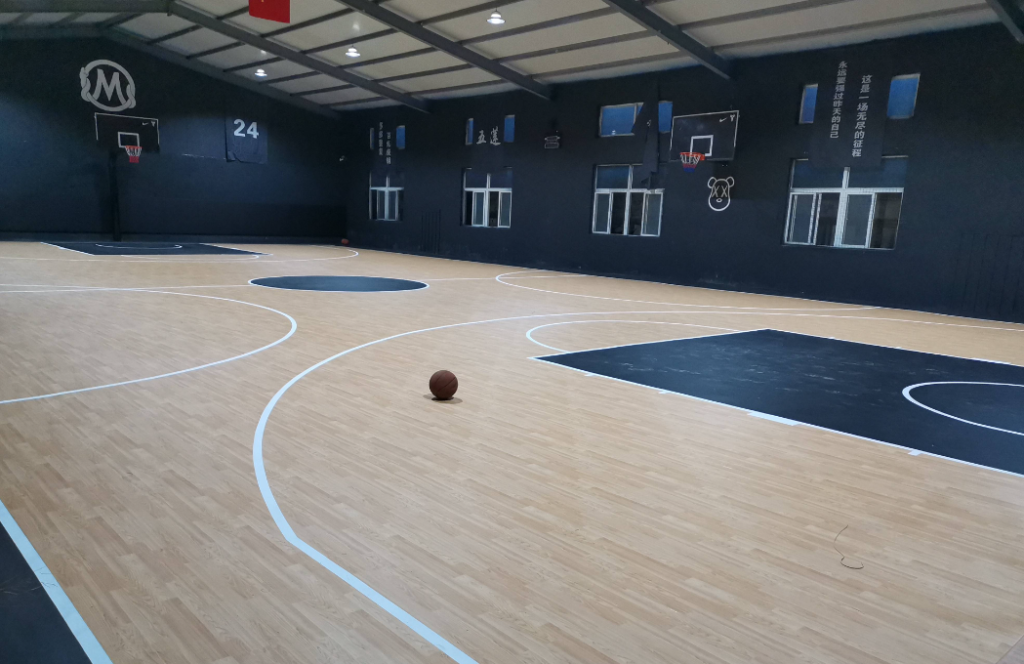
The following section will explain and analyze the parameters, advantages, and disadvantages of various materials:
I. Acrylic court surface Acrylic court surfaces are typically 1.5-2mm thick and available in various colors. They offer superior slip resistance, remaining slip-resistant even when wet, making them arguably the best slip-resistant court surface material available. However, acrylic surfaces lack elasticity, offering less protection against falls and injuries. Because of this lack of elasticity, dribbling retains its original feel, and combined with its excellent slip resistance, it allows for more consistent performance. Therefore, acrylic courts are more suitable for adults and are not recommended for teenagers.
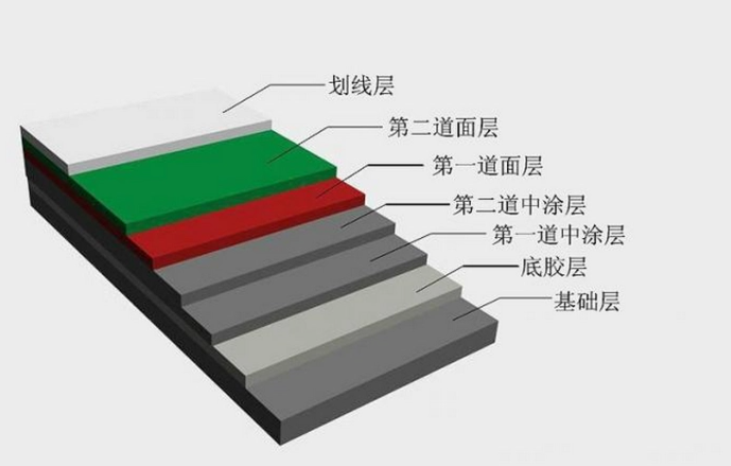
The process of making an acrylic court surface involves mixing acrylic paint and quartz sand and then applying it to an asphalt or cement base. The paint penetrates into the base, fusing it together and solidifying to form a functional court surface.
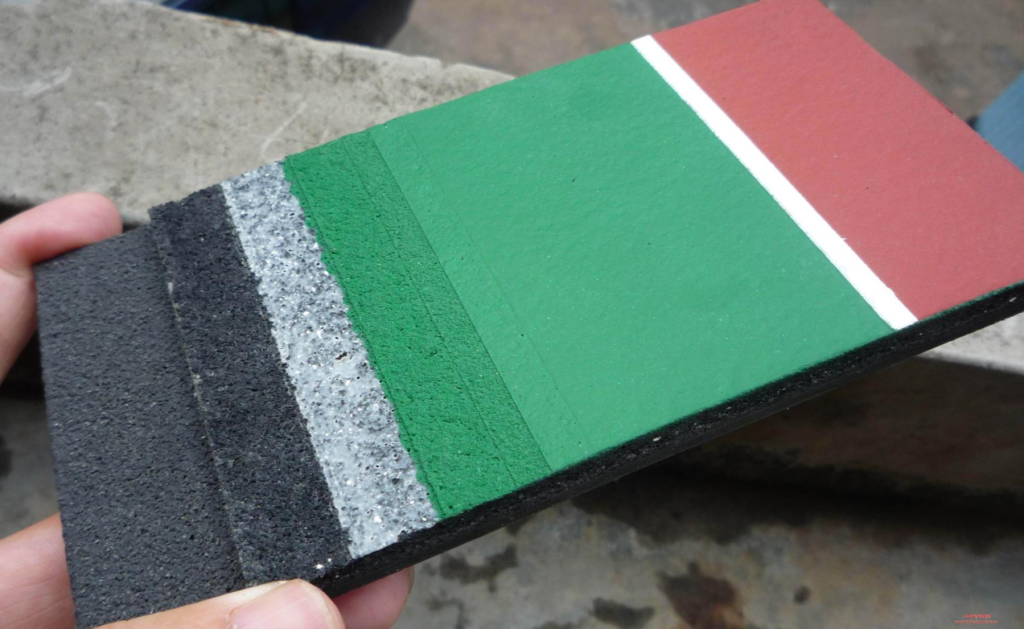
The cost of an acrylic court surface is approximately 25-50 yuan per square meter. The price is mainly affected by the brand of the material. The most commonly used material is a 2mm thick mid-range brand, which costs about 35 yuan per square meter including labor and materials.
II. Silicon PU court surface layer Silicon PU (SPU) court surfaces are typically 3-10mm thick and available in various colors. They offer good slip resistance, although not as good as acrylic surfaces, but still prevent slipping during normal play. Slip resistance decreases slightly when wet. SPU surfaces are elastic, and most schools use 8mm thick SPU surfaces primarily to prevent student falls. However, 8mm SPU can slightly affect dribbling feel, so for adult use, a 5mm thickness is recommended, providing some elasticity and protection without significantly impacting dribbling.
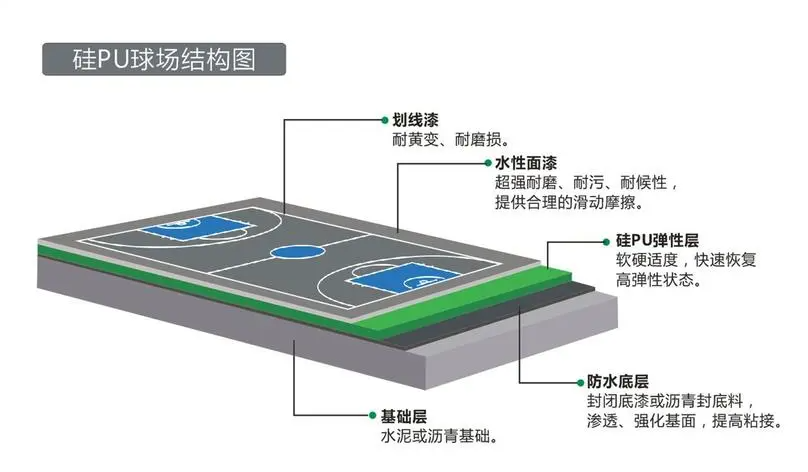
The process of making a silicone PU court surface involves mixing polyurethane coating and quartz powder and then scraping it onto an asphalt or cement base. The coating penetrates into the base, fusing it together and solidifying to form a functional court surface.
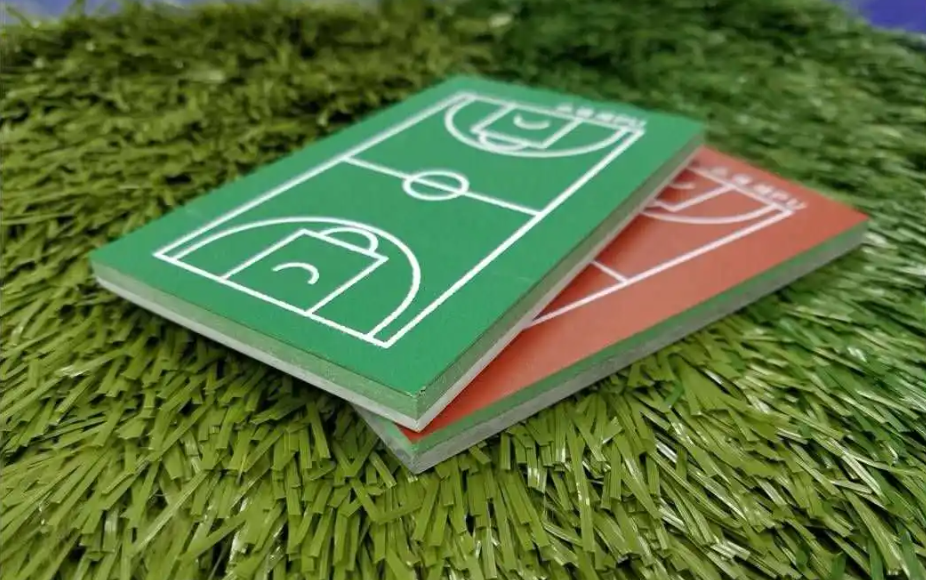
The cost of a silicone PU court surface layer is approximately 60-150 yuan per square meter. The price is mainly affected by the brand and thickness of the material. Mid-range brand materials with a thickness of 8mm are commonly used, costing about 120 yuan per square meter including labor and materials.
III. Suspended FloorSuspended flooring comes in pre-made blocks, typically measuring 30.48cm × 30.48cm × 1.88cm. It can be directly assembled onto cement or asphalt surfaces without the need for adhesive. Each block is connected by a unique interlocking mechanism, making installation very simple and allowing for easy disassembly.
Suspended flooring generally has poor slip resistance, and because it’s placed directly on the ground without any adhesive, its stability is relatively poor, significantly impacting dribbling. Its advantages are easy assembly and disassembly, portability, and flexibility, making it suitable for children’s areas or temporary playing fields.
The cost of a suspended floor sports field surface is approximately 30-90 yuan per square meter. Installation is very simple, and labor costs are almost negligible. However, low-end tiles lack elasticity and have extremely poor anti-slip properties, so care should be taken when selecting them.
IV. PVC Sports FlooringPVC sports flooring is a type of roll material, typically 3.5mm-8mm thick, available in various colors and textures. The most common is a 4.5mm thick maple-look PVC flooring. It’s generally used indoors due to its relatively poor weather and water resistance. It offers elasticity, slip resistance, and protection similar to silicone PU, making it the most widely used material for indoor basketball courts.
To install PVC flooring, simply apply glue to the cleaned floor and then firmly bond the PVC rolls together.
The price of PVC flooring is affected by brand, thickness, and texture. Generally, 4.5mm thick flooring with a maple wood texture is commonly used in basketball courts. Assuming you choose a general brand, it costs about 105 yuan per square meter.
V. Wooden Flooring
Wooden flooring is a common surface material for indoor basketball courts. It offers excellent elasticity and stability, providing superior ball bounce and allowing players better control over the ball’s movement and bounce. Wooden flooring also has good sound absorption properties, reducing noise and echoes on the court and providing a better playing environment for players.
The installation of wooden flooring in basketball courts is relatively complex, requiring the installation of pads, main joists, shock-absorbing pads, subfloor, waterproof layer, panels, and painting.Because wood flooring is expensive and installation is complex, the cost of building a basketball court with wood flooring is generally over 350 yuan per square meter.
How to choose from five types of basketball court materials?Firstly, materials suitable for outdoor use include acrylic and silicone PU; materials suitable for indoor use include PVC and wood flooring; and materials suitable for both indoor and outdoor use include suspended flooring.If the venue is outdoors, choose between acrylic, silicone PU, and suspended flooring. Acrylic offers the best slip resistance and is inexpensive, but lacks elasticity. Silicone PU provides good slip resistance and elasticity, but is significantly more expensive than acrylic. Suspended flooring offers the worst slip resistance and stability, but is easy to install and remove.For indoor venues, the choice is between PVC, wood flooring, and suspended flooring. PVC is the most commonly used material because it is reasonably priced and offers balanced performance. Wood flooring is too expensive and is generally used in high-end stadiums or venues that frequently host tournaments. Suspended flooring is typically used in kindergartens or children’s playgrounds.PS: In fact, acrylic and silicone PU can also be used indoors, but they are installed by penetrating into the base layer, which makes them very troublesome to remove in the future. Indoor venues are usually rented, so there is a risk of disputes in the future.